

There are many kinds of awakenings referred to by various spiritual teachers, certainly known to those who have treaded the spiritual path long enough. In most cases, the intellectual insight is considered to be the first and often the most important one. In this path of Shaiva Tantra, awakening is not just a mental or even spiritual event, it is a physiological one. It is the nervous system that carries the weight of expanded consciousness, and without proper care, that weight can feel unbearable.
Shakti comes through the body first. Sometimes through the fire of a consciously seeking — the deep desire and will to know oneself fully. Sometimes, with outgoing warning, through the simple longing to be healed. Through movement, through stillness, through the sudden, overwhelming sense that something vast is looking out through your eyes. Śakti does not arrive as a philosophy — she arrives as sensation, as aliveness. She wants to be expressed through you, as your most essential self — the ground of consciousness. Your innermost nature as an expression of that power.
It catches you unaware, even in the setting where one is there eager for it to happen. That was certainly my experience, when at the immersion with Igor Vamadeva Kufayev, my partner, teacher, beloved and father of our now three children, of how dramatically sudden and jolting that encounter with one’s innermost Self is. I know this not only from witnessing others, but from the inside.
Fast forwarding to our most recent immersion in Portugal, watching others enter that same threshold, prompting this sharing.
The Field in Portugal felt charged almost from the very first seating. The firstness of it — first gathering of the year, first time the Sangha had brought Igor’s work to that land — seemed to sit in the room with us.
It seems increasingly clear that the intensity we are all navigating in the outer world does not stay outside the door of an immersion. It arrives with us, woven into our bodies and our questions, and in that particular week, it seemed to deepen everything. The auspiciousness of the timing was held consciously — Igor invited us to consider what we were calling in, and what we were finally ready to release. That open invitation to “rise to something greater” is a call to move beyond the limitations of the self, fear, or current circumstances and embrace a more expansive, purposeful way of living.
In the question and answer sessions I kept noticing a particular quality of silence before the women spoke — the kind that carries something heavy. What surfaced, again and again, were questions about identity: who they had been before this process began, and who they were becoming, and the strange vertigo of the distance between the two. What was still serving the path? What was ready to fall away?
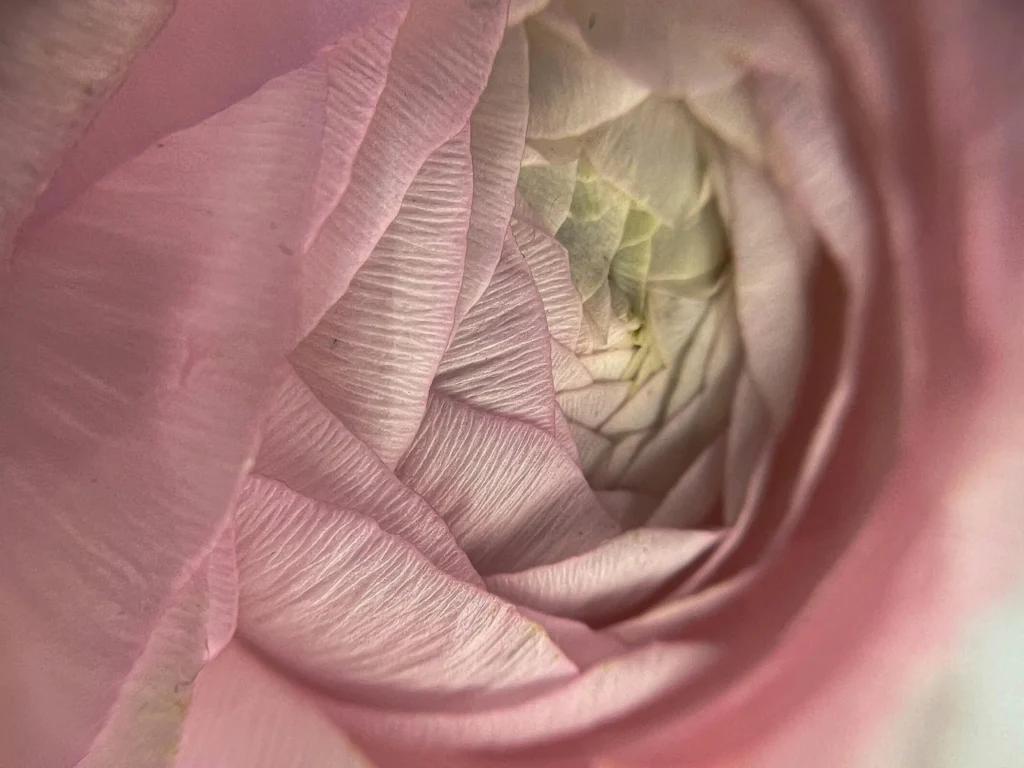
It brought me back to my own awakening — not as memory exactly, but as sensation. The way understanding doesn’t arrive like knowledge but more like petals loosening: you don’t choose to let them fall. You simply notice, one morning, that the flower has already opened.
This is what I return to, again and again, when I sit with women who are in the thick of it. And in eight years of working with women walking this path, what I have witnessed again and again is when she arrives, there are no guarantees that something will not interrupt. Life pulls us back. Fear closes the door. There is no one nearby who understands what is happening and we feel alone. And a jiva is left mid-transformation, holding something sacred she has no container for yet.
This sharing is written for those who are going through this right now. It is written from within a living tradition. Vamadeva’s teaching — that we must come back to the body, because the body is the place where it all takes place — is as relevant now as it has ever been. Perhaps more so.
In the non-dual tantric tradition, Kashmiri Shaivism, among its deepest expressions, awakening is not viewed as a final destination, nor a state of listless bliss or escape from the world. It is the beginning of a profound process of embodiment. The body asking to be remade in unity with the nature it is made from.
Śakti floods the room, floods the body, and leaves you, subtly or dramatically, transformed. With a life you no longer recognise. A different pattern of your thoughts, a different, retuned, nervous system. The windows to the heart opened wider, so that the small ordinary acts of waking and feeding and loving — all of it asks to be met differently now.
And the body, this body that has carried you all your years, has to learn how to hold what has come through it. This is what unfurling is. Each petal a layer of mind, body, and soul — releasing in its own time, asking to be met with steadiness rather than urgency.
As I give myself fully to this becoming, I want to be honest about the path — the pitfalls, the messy middle, the places where we stumble before we find our footing. This is not a linear process. We will make mistakes. We will circle back. And this is precisely why we need sangha — a community of others who are amidst the same unfolding, who can hold us when we lose our way.
When we go it alone, or follow voices that tell us we are “our own guru” and need nothing beyond ourselves, the subtler tendencies — the ones that keep us spinning in place — can go unseen for a very long time. Not because we aren’t sincere, but because we simply cannot see our own blind spots without a mirror. And I say this knowing I am not exempt from it. I have been that woman.
It is not an overnight process, allowing the petals to fall away and something new to ripen in their place. But this is where the gold is. Not in transcending life, but in refusing to abandon it. Our teacher speaks of not throwing the baby out with the bathwater — and this is exactly that. We are not here to disembody. We are here to embody more aliveness than we have ever allowed ourselves before.
Looking back to 2016, at an immersion where Vamadeva gave me my name, I touched something so deep that coming back from that one experience rearranged me from the inside out.
The only word for what moved through my body was pure love, love as the ground of all being, vast and fragrant, moving through me like a vibrant pattern of creation that had always been there, waiting to be felt. It held me, caressed me open. And in that opening I knew — not as a thought but as a felt certainty — that I had never been separate from it. That this was my true origin, my true nature, my true home.
The loneliness I had carried without even knowing I was carrying it simply fell away.
Nothing would taste the same again.

The most intimate parts of self had shattered — and this was liberation, not loss. In their place, I knew I could not continue as before. What followed was lacking in allure for most, deeply down to earth. Time for daydreaming. Time for study. Time in nature. Nourishment in its many forms. Learning to notice what was feeding the awakening and what was simply noise.
The way a fruit ripens from seed in dark earth. Slow. Hidden. Dependent on conditions that look, from the outside, like nothing is happening at all.
You cannot rush it or bypass it — and it is best done in community, alongside a heart-based teacher who has walked the terrain and can recognise where you are, even when you cannot see it yourself.
What follows awakening is day-to-day practice. Tedious, as it is learning your unique body constitution through Ayurveda — what foods steady you, what depletes you. Building a sleep and waking rhythm that your nervous system can trust. Working with the hours of the day rather than against them. Finding the sacred pauses that let the body remember, from the inside, what safety feels like.
This is the work almost no one prepares you for. And it is the work that makes all the difference.
There were years when I was still living within my own avidyā — missing the mark of what was required — because from the outside, and even to myself, it looked like I was integrating, evolving, doing everything right. When in truth I was quietly, almost imperceptibly, running. I can see it now with a clarity that feels both sobering and tender. I wasn’t simply busy or productive, I was caught in a subtle internal circling that kept me in motion just enough to avoid ever truly arriving with myself. Movement had become my refuge, the place I could hide in plain sight.
Because to stop striving, to really soften the urge to keep reaching and proving and doing, would have meant meeting the raw exposure that lived underneath it all. And I wasn’t yet ready to feel that.
The running wore a particular face.
So I gave, and I kept giving in ways that looked generous, loving, even selfless, while beneath the surface it quietly protected me from something far more confronting — from having to receive my own goodness, from tending to my own emotional needs, from allowing myself to be seen fully in my own light without earning it. And speed — that familiar rhythm I had worn like a badge of honour since girlhood, the one that made me capable and praised — began to shift its shape, slowly and almost invisibly, from something that once served me into something that shielded me. It became overgiving, overreaching, overriding — a way of keeping the light just far enough away that I would not have to let it change me.
Because the truth is, once you let the light in fully, it asks something of you that cannot be undone—it does not let you remain who you were, and there is grief in that; not a neat grief, but something primal and unsettling. The grief of seeing how long you did not truly see yourself, of recognising the ways you participated in your own neglect and calling it strength, of realising that what carried you also kept you from receiving what you needed. And this is the part no one really prepares you for—that awakening is not only expansion, but mourning; mourning the woman who kept going when she needed to stop, who held everything together while quietly coming apart, and who had not yet learned how to stay. It was in sitting with that grief — not moving past it — that I found my way back to what the tradition had always offered.
“She seeks not destruction, but nourishment. She ascends on tiptoe, reaching heavenward to sip the subtle soma, infusing the body with ambrosia and beatitude.”
– Igor Kufayev, From the book “KUṆḌALINĪ: The Goddess as the Power of Self-Recognition in Tantric Śaivism”
For this, the old books do not rush us forward—they call us back, again and again, to cultivate the very substance that can hold the light: Ojas. I’ll use Sanskrit, because there is no single English word that can carry its fullness—people reach for “resilience,” “immunity,” “vitality,” but Ojas is not one thing, it is the quiet accumulation of being well-met over time. It is what gathers when the awakened force within her softens its urgency and slows enough to be met by the very life it once tried to transcend, when she returns to the simplest acts with devotion—cooking her own food with presence, warming oil in her hands and letting it sink into her skin like a quiet remembering of something ancient, something already known, something that never needed to be chased. It is there, too, in the moments when she allows her tears to fall without interrupting them, without rushing to translate them into meaning or shape them into a story that feels safer, more contained, more acceptable.
And it is what begins to form, almost imperceptibly at first, when she releases the demand for awakening to make sense, when she loosens the grip of needing to master it or measure her progress within it, and instead turns—gently, consistently, with a kind of reverence—toward a far more intimate inquiry: what does this body need today, in order to remain here, in contact with what is truly moving within it, without leaving, without bracing, without turning away.
And when that question is no longer asked from urgency or self-improvement, but becomes something quieter, steadier—almost like a daily prayer whispered through the body itself—something begins to shift in a way that cannot be forced or accomplished. The nervous system softens its grip, the edges of experience begin to lose their sharpness, and the body, which has been bracing for so long, slowly begins to unfurl in its own time, guided by an innate intelligence that only needs to be remembered, revealing a kind of strength that is not built through effort, but through the quiet, courageous act of staying.
When the body remembers, Śakti has somewhere to live.
Spiritual awakening rarely begins with clarity; more often it arrives as a quiet destabilisation, a subtle but undeniable loosening of the structures that once held your identity, your relationships, your sense of reality together, until what once felt certain no longer quite fits in the same way, and you find yourself moving through your days with a sensitivity that is both revealing and, at times, deeply disorienting.
And yet, knowing this in the body and being able to live from it are two different things. The tradition does not leave us there, in the beauty of recognition — it offers us a structure to return to when we forget, as we always will. This movement does not need to remain uncontained, does not need to spiral into overwhelm or fragmentation, because it can stabilize when there is a steady and easeful way of holding it within the body and within life itself. Sthira Sukham —that quiet instruction from the Yoga Sutras of Patanjali that posture, and therefore life, should be both steady and comfortable—becomes less of an idea and more of an orientation, a way of living where there is structure without rigidity and softness without collapse, where the more you embody and listen to, rather than overridden, the more experience is allowed to land, to settle, to be metabolised, instead of constantly being moved past or explained away.
Because Śakti—the dynamic, intelligent, and deeply nurturing essence that guides us from fragmented awareness toward a more complete wholeness—is not simply an idea or a force to admire, but the very Mother energy that roots, nourishes, and sustains life from within, and she does not come to be held at a distance or understood only in moments of expansion; she comes to be housed, to be lived with, to be embodied through the ordinary, intimate textures of a jiva’s life, and that requires a system that can truly hold her—without bracing, without leaking, without needing to escape the intensity of what is awakening within it.
And so the work becomes one of quiet orchestration, where life is shaped through remembering our nature, aligning to the rhythm of the sun and moon—through days that are consistent enough to build trust in the body, through nourishment that is prepared and received with presence rather than urgency. Through boundaries that are lived and felt rather than simply spoken that gathers slowly and steadily over time, as Ojas deepens, as the nervous system begins to recognise safety as a lived experience. And as the body learns, perhaps for the first time, that it is safe to stay, safe to feel, and safe to hold more life without fragmenting.
“Every moment becomes an act of sacred assimilation… parenting, loving, hurting, walking through airports, washing dishes, being misunderstood… Kuṇḍalinī does not awaken just to liberate you from the world. She awakens to transfigure the world itself — through you.”
– Igor Kufayev
And so we arrive here, the steady shift in how you hold yourself when no one is watching. Śakti, when she ripens in a woman, does not ask you to become more or prove anything. She brings you back to what has always been true. You are worthy before the healing, before the striving, before the becoming. You are loved not for what you give, but for who you are. Your life is not meant to drain or deplete you, but lived from a body that knows how to receive. This is where the pattern begins to break. You stop feeding the world from your wounds and begin to nourish it from your fullness. Your presence becomes medicine, because you are rested, rooted, nourished and remember your wholeness. And you are no longer abandoning yourself. Let this be the place you return to, again and again.
Amrita Ma Devi is a devoted mother of three, founder, plant-based chef, and lifelong practitioner of Ayurveda and the sacred path of embodiment. As a facilitator in Vibrant Self Academy, she weaves together Ayurvedic wisdom, feminine spirituality, and nervous system attunement to support women in returning to their innate wholeness and radiance.
Her work lives within the Sacred Vitality Collective and the Vital Woman Rising 12-week immersion. Follow her on YouTube for transmissions, teachings, and devotional practices.
Sant Joan, Mallorca. April 2026
Photos: Courtesy of Flowing Wakefulness
Responses